|
EQS-News: Alcor Scientific
/ Key word(s): Miscellaneous
Peer-reviewed economic analysis finds a combined ESR + CRP testing strategy reduces misdiagnoses and delivers net cost savings compared to CRP alone SMITHFIELD, R.I., March 23, 2026 /PRNewswire/ -- 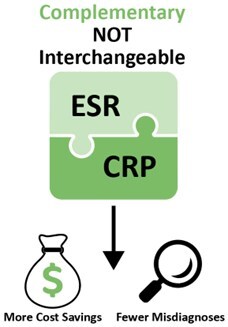 The $9.95 Million Question: Is ESR Worth Keeping? A new ALCOR Scientific sponsored peer-reviewed study published in ClinicoEconomics and Outcomes Research makes a powerful economic case for retaining erythrocyte sedimentation rate (ESR) testing alongside C-reactive protein (CRP) for managing patients with inflammatory conditions — directly challenging calls to eliminate ESR in the name of cost savings. The study found that combining ESR with CRP reduces misdiagnoses and generates substantial net cost savings compared to ordering CRP alone. For a representative 739-bed academic medical center in the United States, the analysis projects net annual savings of $9.95 million from reduced follow-up costs associated with misdiagnoses — driven primarily by avoided unnecessary workup from false positives associated with CRP. ESR and CRP Are Not the Same Test Critics of combined testing have argued that ESR and CRP are redundant. This study challenges that assumption head-on. "The kinetics of CRP and ESR are fundamentally different," the authors note. CRP rises rapidly within hours of acute inflammation and normalizes within days. ESR, by contrast, increases more slowly over 24–48 hours and remains elevated longer — making it especially valuable for detecting chronic and subacute inflammatory conditions like polymyalgia rheumatica, giant cell arteritis, lupus, and certain malignancies. These biological differences mean the two tests provide complementary, not redundant, clinical information. Using both — when interpreted correctly — improves diagnostic accuracy in ways that a single test cannot replicate. Why This Research Matters The findings arrive at a pivotal moment in value-based care. The former "Choosing Wisely" initiative pressured hospitals to cut "redundant" laboratory testing, with ESR frequently cited as a target. This initiative began when ESR was still a manual test – not fully automated like it is today – and when there was minimal evidence on the financial impact to health systems. Automated ESR is reimbursed in the US at just $2.70 per test – less than a cup of coffee – and fully automated testing no longer burdens the clinical laboratory with hands-on time. The incremental investment is minimal when tested alongside CRP. The return — in the form of avoided misdiagnoses and their downstream follow-up costs — is orders of magnitude greater. Lab testing costs are typically well below the reimbursement rate, further strengthening the cost effectiveness of ESR. "Modern ESR analyzers are fast, automated, and inexpensive," the authors write. "The older argument that ESR is burdensome to laboratory resources no longer holds. The question is whether the diagnostic value justifies the cost — and for the ESR + CRP strategy, the answer is clearly yes." Study Design and Scope The study used a decision-tree economic model simulating cohorts of 100 patients, evaluated from the U.S. healthcare system payer perspective. Eight conditions were analyzed: rheumatoid arthritis, inflammatory bowel disease, periprosthetic joint infection, giant cell arteritis, pancreatitis, infection, autoimmune disorders, and cancer. Sensitivity and specificity data were drawn from published clinical literature. Costs were sourced from Centers for Medicare & Medicaid Services reimbursement rates (ESR: $2.70; CRP: $5.18). Follow-up costs for misdiagnoses were derived from U.S. clinical guidelines and validated by clinicians. Results were robust across scenario analyses varying test costs, follow-up costs, and diagnostic accuracy inputs. Takeaway It turns out cutting ESR to save money has the opposite effect. When ESR and CRP are used together, misdiagnoses fall and follow-up costs fall with them. ESR is fast, automated, and cheap. The argument for dropping it doesn't hold up when the cost to the overall health system is evaluated. If testing ESR and CRP together - two fully automated, low cost markers of inflammation – helps reduce misdiagnoses, why does the push to reduce ESR testing persist? The real world impact of testing ESR and CRP alongside each other depends on the institution, disease, patient population, disease prevalence, and so on. However, keeping a time-tested, clinically valuable test that costs payers just $2.70 in order to help prevent unnecessary follow up testing just makes sense. About the Study Citation: Yarnoff B, Morris W, Zivaripiran H, McCutcheon M, Koshy T. "Economic Evaluation of Combined Testing Strategies Using Erythrocyte Sedimentation Rate and C-Reactive Protein Tests." ClinicoEconomics and Outcomes Research. 2026;18:578961. DOI: 10.2147/CEOR.S578961 Funding: This study was sponsored by ALCOR Scientific LLC. Media Contact  Photo - https://mma.prnewswire.com/media/2936605/ESR_and_CRP_complementary.jpg

23.03.2026 CET/CEST Dissemination of a Corporate News, transmitted by EQS News - a service of EQS Group. |
 View original content:
2296296 23.03.2026 CET/CEST