|
EQS-News: The Royal Commission for AlUla
/ Key word(s): Miscellaneous
ALULA, Saudi Arabia, Oct. 21, 2026 /PRNewswire/ -- The Royal Commission for AlUla has launched the latest phase of its 2026–2027 Archaeology Season, bringing together Saudi and international teams to advance long-term archaeological research across AlUla and Khaybar.
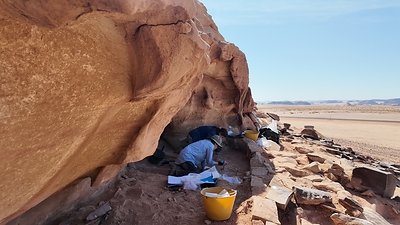
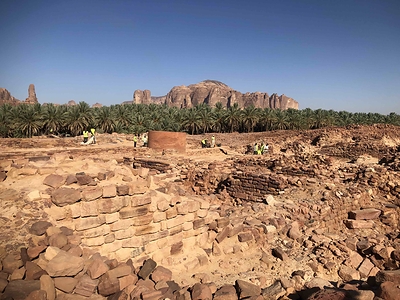
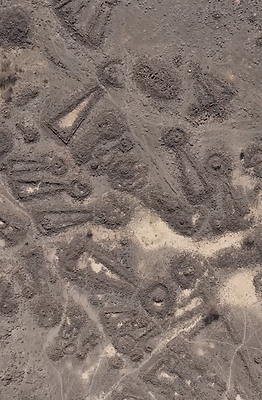
Building on the momentum of previous seasons, this year's programme continues RCU's work to study, document, conserve and interpret one of north-west Arabia's most significant archaeological landscapes. The season brings together a broad programme of fieldwork, specialist research, digital documentation and community engagement across AlUla and Khaybar, supporting deeper understanding of the region's human history and its role within the ancient world. The programme reflects the growing maturity of RCU's archaeology work. As missions return to the field, researchers are moving from individual discoveries into deeper scientific analysis, connecting evidence across periods, sites and disciplines to build a richer understanding of how people lived in, moved through and shaped the landscapes of AlUla and Khaybar over millennia. This season's work is structured around key research themes, including early human presence and prehistory; ancient kingdoms and oasis societies; routes and pilgrimage; environmental history and water management; inscriptions and written heritage; material culture and subsistence; conservation; and digital documentation. At Hegra, teams are continuing survey, excavation and specialist studies of the settlement centre and ancient oasis, including material linked to flora, fauna and small finds. This work aims to deepen understanding of life at the site across multiple periods and to support the wider interpretation of Hegra's archaeological landscape. In Dadan, the second phase of the Dadan Archaeological Project is building on the results of the previous five-year mission. Current work is focused on further excavation and study of funerary and residential areas, helping researchers better understand the development, use and reuse of one of AlUla's most important ancient centres. In Khaybar, continuing and new research is examining the oasis across different periods. This includes excavation of the major Neolithic site of Al-Maṭḥana, alongside studies of sedimentary archives, palaeoenvironments and human societies from late prehistory through the Islamic period. Together, these missions are helping researchers understand the relationship between natural resources, human presence and cultural change in one of the region's most important oasis landscapes. The Pilgrimage Routes in South AlUla project is continuing work on forts and railway stations, while surveying more than 100 km between AlBadai' and Zumurrud forts to trace north-south routes of travel in Islamic and earlier periods. This research is helping to clarify how people, goods and ideas moved across the region through networks of travel, trade and pilgrimage. The AlUla Inscriptions Corpus Analysis Project, in collaboration with Ghent University, is continuing work to translate, study and contextualise inscriptions recorded across AlUla. The project supports access to one of the region's most important bodies of written heritage, building on AlUla's record of more than 25,000 inscriptions and contributing to future research through the development of an online database. Specialist studies are also expanding understanding of daily life and environmental history. Research into animal remains, ceramics, qanat water systems and material from Tell Saq is helping archaeologists move from field discovery into deeper analysis of diet, production, exchange, ritual practice, oasis water management and material culture. The season also reflects RCU's commitment to developing Saudi capability in archaeology and heritage research. Through fieldwork, laboratory work, specialist studies, digital documentation, community engagement and collaboration with leading international institutions, the programme supports knowledge transfer and helps develop the next generation of Saudi archaeologists, researchers and heritage professionals. A community engagement workshop will also introduce participants, including teachers, students, Rawis and rangers, to AlUla's heritage through practical activities, museum and laboratory experiences, and site visits, helping connect archaeological research with local knowledge and public engagement. Dr Abdulrahman Alsuhaibani, Vice President of Culture at RCU, said: Dr Rebecca Foote, Director of Archaeology and Cultural Heritage Research at RCU, said: The research programme also supports how AlUla's heritage is interpreted and shared with the public. Findings from archaeological missions inform exhibitions, site interpretation, Rawi storytelling, cultural programming and public-facing heritage experiences, helping visitors engage with AlUla's heritage through evidence-based narratives. RCU's long-term archaeology programme forms part of its wider commitment to preserving AlUla's cultural heritage, investing in knowledge, strengthening national capabilities and positioning north-west Arabia as a major centre for archaeological research, cultural exchange and heritage-led development.

21.10.2026 CET/CEST Dissemination of a Corporate News, transmitted by EQS News - a service of EQS Group. |
 View original content to download multimedia:
2419496 21.10.2026 CET/CEST